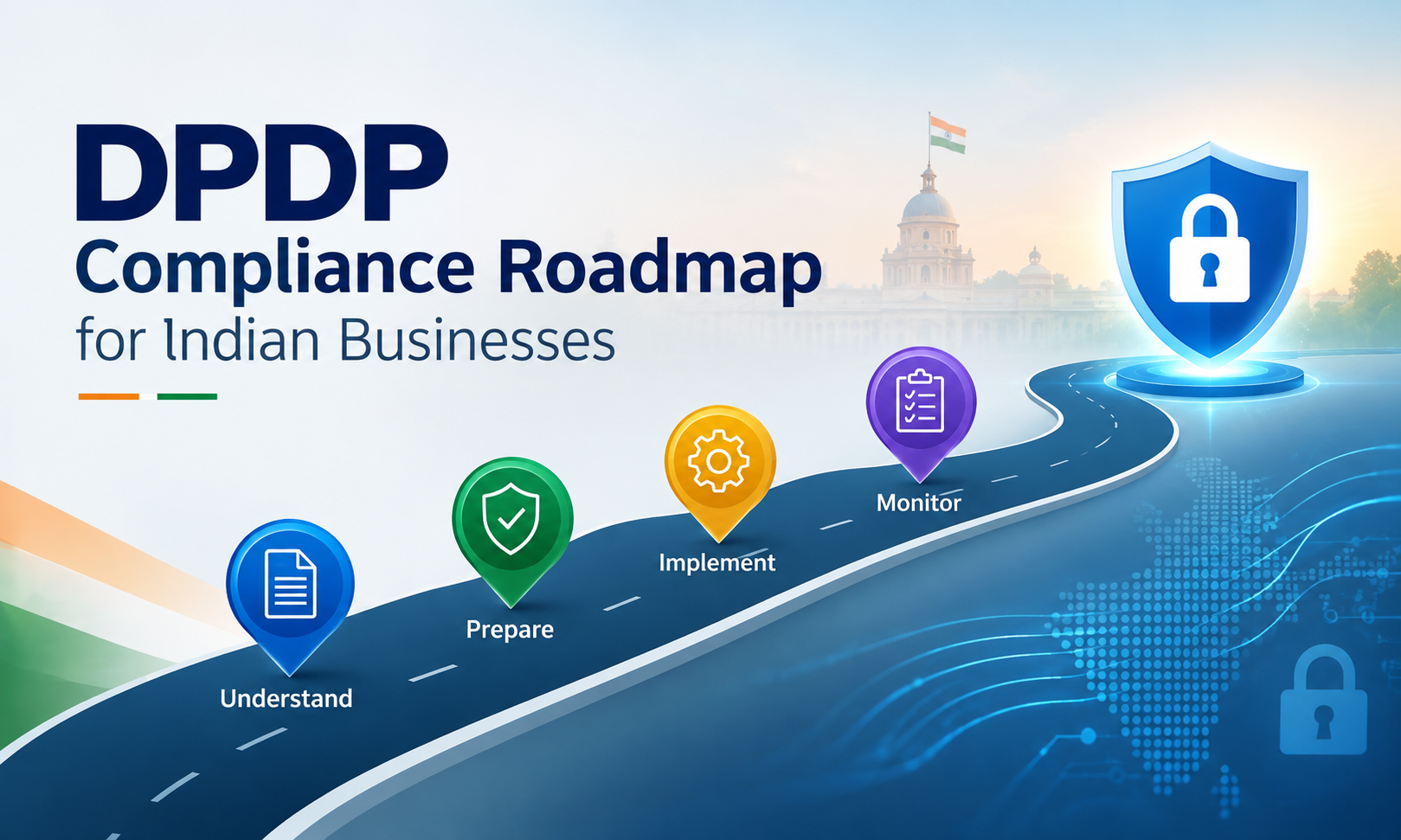
Lays out a staged DPDP compliance roadmap — from data discovery through vendor contracts and breach readiness — mapped against the regulatory timeline running up to May 2027.
Ask most compliance heads what their DPDP plan looks like, and you'll often get a single answer: "we're waiting for May 2027." That's the date the DPDP Rules' substantive obligations come into force — but treating it as a light switch rather than a finish line is exactly how businesses end up scrambling in the final quarter, trying to compress eighteen months of foundational work into six weeks.
A compliance roadmap isn't a document you write once and file away. It's a sequence — each stage depending on the one before it, each one taking longer to do properly than most timelines assume. Here's what that sequence actually looks like, and where most organizations are likely to be right now.
Why "Readiness" Isn't a Single Milestone
The instinct to treat DPDP compliance as a checklist — privacy policy updated, consent banner added, done — misses how the Act is actually structured. Real readiness spans five interlocking areas: knowing what data you hold, having a lawful basis for holding it, giving people meaningful control over it, being able to secure and report on it, and making sure every vendor touching that data is bound to the same standard. Skip one, and the rest doesn't hold up under scrutiny.
The Roadmap, Stage by Stage
| Stage | Core Activity | Typical Output | Realistic Timeframe |
|---|---|---|---|
| 1. Data discovery and mapping | Identify every system, form, and process that collects or stores personal data, and why | A data inventory mapped to purpose and legal basis | 4–8 weeks for a mid-sized organization |
| 2. Gap assessment | Compare current notices, consent flows, and retention practices against DPDP requirements | A prioritized gap register | 2–4 weeks, once discovery is complete |
| 3. Notice and consent redesign | Rewrite notices in plain language; rebuild consent capture to be specific, unbundled, and withdrawable | Updated consent flows across web, app, and offline touchpoints | 6–10 weeks, including testing |
| 4. Rights and grievance infrastructure | Build a process to receive, verify, and respond to access, correction, and erasure requests | A documented SLA-backed rights-request workflow | 4–6 weeks |
| 5. Vendor and processor contracts | Classify every vendor as Fiduciary or Processor; execute Section 8(2)-compliant contracts | Updated data processing agreements across the vendor base | 8–12 weeks, depending on vendor count |
| 6. Security and breach readiness | Implement reasonable security safeguards; build a breach-response plan that can meet the 72-hour Board reporting window | A tested incident-response runbook | 6–10 weeks |
| 7. Governance and monitoring | Assign ownership, train staff, and build ongoing monitoring so compliance doesn't decay after go-live | A recurring compliance review cadence | Ongoing |
Laid end to end, that's roughly six to nine months of focused work for an organization of moderate complexity — longer for anyone with a sprawling vendor base, legacy IT systems, or data scattered across regional offices. That's before accounting for the reality that most compliance teams are running this alongside their regular workload, not instead of it.
Where the Regulatory Clock Actually Sits
It helps to separate what's already in force from what's still ahead:
| Milestone | What It Means | Status |
|---|---|---|
| November 13, 2025 | Data Protection Board of India established; core institutional provisions active | In force |
| November 13, 2026 | Consent Manager registration framework activates | Upcoming |
| May 13, 2027 | Substantive obligations — notices, consent, breach reporting, rights fulfilment, vendor contracts — come into force | Upcoming |
The Board already exists and can act on institutional matters today. The 2027 date is when the operational requirements — the ones that touch nearly every function in a business — become enforceable, with no phased grace period built in afterward. Working backward from that date, and accounting for the stage-by-stage timeline above, most organizations that haven't started discovery yet are already behind where they'd want to be.
The Sequencing Mistake Worth Avoiding
The most common planning error isn't underestimating any single stage — it's running them out of order. Businesses frequently jump straight to rewriting consent banners or updating a privacy policy before completing data discovery, which means the new notice ends up describing processing the business hasn't actually mapped yet. When the Board or an auditor later asks for evidence — what data is held, why, and under what consent — a polished notice with no underlying inventory doesn't hold up.
Discovery has to come first, even though it's the least visible, least "finished-feeling" stage of the roadmap. Everything downstream — the notice language, the consent design, the retention schedule, the vendor contract scope — depends on knowing precisely what data exists and where.
Significant Data Fiduciaries Have an Extra Layer
If your organization is likely to be classified as a Significant Data Fiduciary — based on factors like the volume and sensitivity of personal data processed — the roadmap above is the floor, not the ceiling. SDFs carry additional obligations: periodic data protection impact assessments, algorithmic audits, and a mandatory India-based Data Protection Officer. Those requirements typically need to be layered onto stages 6 and 7, and they tend to demand external expertise most organizations don't already have in-house — worth flagging early rather than discovering at the audit stage.
Building the Roadmap Without Building It From Scratch
None of this requires reinventing how your organization already handles data governance. It requires a structured way to see, stage by stage, where you currently stand against what the Act and Rules require — and a realistic sense of how long each remaining stage will actually take, rather than an optimistic guess made under deadline pressure.
TheDPDPAct.com's assessment platform is built around exactly this staged structure — mapping your current position against each phase of the roadmap, from data discovery through to ongoing governance, so the plan you build reflects where your organization actually is, not where a generic checklist assumes every business starts. Given how much of this work depends on getting the sequence right, the earlier that assessment happens, the more of the runway to May 2027 is still usable.